
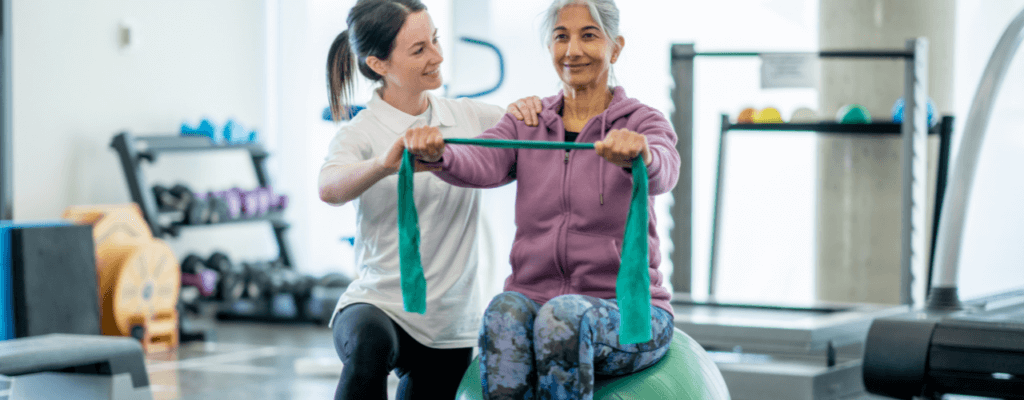
Expert-Guided Strategies to Reduce Fall Risk, Restore Confidence, and Stay Independent
Balance doesn’t usually disappear overnight.
For most seniors, it starts subtly. A moment of hesitation when standing up. Grabbing the counter more often. Feeling unsure on stairs or uneven sidewalks. These small changes are often brushed off as “just part of aging,” but clinically, they’re early warning signs.
Falls are the leading cause of injury-related hospitalizations among adults over 65. Yet the majority of balance-related decline is preventable and reversible with the right intervention.
For seniors searching for physical therapy Evanston IL, physical therapy Skokie, or nearby North Shore care, understanding why balance changes and how to train it safely is the first step toward staying independent.
At an expert-led physical therapy clinic like Skillz Physical Therapy in Evanston, balance training is not treated as generic exercise, it’s treated as essential medical care.
Why Balance Declines With Age (And Why That’s Not the End of the Story)
Balance is not one system. It’s the coordination of several systems working together:
- Muscle strength, especially in the hips, legs, and core
- Joint mobility, particularly the ankles, knees, hips, and spine
- Nervous system reaction time
- Vision and inner-ear input
- Psychological confidence and fear response
Research shows that balance decline is rarely caused by age alone. Instead, it’s driven by:
- Reduced muscle use
- Chronic joint pain
- Poor movement habits
- Compensations after injury
- Fear of falling, which changes posture and gait
These factors respond extremely well to targeted physical therapy.
Studies consistently show that seniors who follow structured balance programs improve:
- Walking stability
- Reaction speed
- Confidence with daily movement
- Overall fall-risk reduction
This is why early intervention matters.
The Hidden Cost of “Just Being Careful”
Many seniors instinctively adapt by:
- Walking slower
- Avoiding stairs
- Holding onto furniture
- Sitting more frequently
Psychologically, this feels protective.
Physiologically, it accelerates decline.
Less movement leads to weaker muscles. Weaker muscles lead to worse balance. Worse balance increases fall risk.
This cycle is one of the most common patterns physical therapists see in seniors seeking balance therapy near me, often after a fall that could have been prevented.
Exercises That Improve Balance for Seniors
(Safely, Effectively, and Clinically)
**Important note: Balance exercises should feel challenging but controlled. If pain, dizziness, or fear is present, professional guidance from a physical therapist is strongly recommended.
1. Sit-to-Stand
Why it matters: Standing up from a chair is one of the most common moments when falls occur.
What it improves:
- Thigh and hip strength
- Safe movement transitions
- Confidence getting up from seated positions
Clinical insight: Difficulty here often signals underlying knee or lower back weakness—key areas addressed through knee pain physical therapy treatment and lower back pain treatments.
2. Single-Leg Stance
Why it matters: Walking is essentially controlled single-leg balance.
What it improves:
- Hip stability
- Neuromuscular coordination
- Confidence during walking
Clinical insight: Many seniors start at just 2–3 seconds. Improving this time is one of the strongest predictors of reduced fall risk.
3. Heel-to-Toe Walk
Why it matters: This challenges balance during forward movement.
What it improves:
- Coordination
- Postural control
- Focus during motion
Clinical insight: This exercise often reveals balance deficits that aren’t obvious during normal walking.
4. Weight Shifts
Why it matters: Falls frequently occur during unexpected changes in direction.
What it improves:
- Reaction control
- Confidence shifting weight
- Turning safety
Clinical insight: Especially helpful for seniors who feel stiff, cautious, or hesitant when changing directions.
5. Step-Ups
Why it matters: Curbs, stairs, and uneven surfaces are common fall triggers.
What it improves:
- Leg strength
- Depth perception
- Controlled stepping mechanics
Clinical insight: Difficulty often links to hip or knee mechanics—areas thoroughly evaluated in physical therapy Evanston IL programs at Skillz Physical Therapy.
Why Generic Balance Exercises Often Fall Short
Many seniors try exercises they find online. Most stop because:
- Pain flares up
- Confidence drops
- Progress plateaus
- Fear takes over
Balance improvement requires precision, not volume.
At Skillz Physical Therapy, our physical therapists assess:
- Which muscles are underperforming
- Which joints are limiting balance
- Whether pain is altering movement
- How fear affects posture and reaction time
This clinical insight is the difference between “doing exercises” and actually restoring balance.
Why Seniors in Evanston and Skokie Choose Skillz Physical Therapy
Seniors and families across Evanston, Skokie, Wilmette, and Rogers Park seek care at Skillz Physical Therapy because it is:
- An expert-led physical therapy clinic
- Focused on fall prevention and balance restoration
- Experienced in knee pain, lower back pain, and mobility conditions
- Conveniently located at 839 Dodge Ave, Evanston, IL
- Known for attentive, patient-first care
Balance isn’t just physical, it’s emotional. Feeling steady changes how people live, move, and engage with their world.
The Smart Next Step
If balance feels uncertain, the safest move isn’t to “wait and see.”
It’s to understand why balance is changing and address it early.
At Skillz Physical Therapy, seniors receive science-based and attentive care designed to restore stability, confidence, and independence, without rushing or guesswork.
Because staying upright shouldn’t feel like a daily challenge.
Call (847)-859-6240 to speak with our Office Admin Coordinator today. No pressure, just clarity.