
The Short Answer: Yes, But Expect an Evaluation or a Quick Screening First
You can absolutely tell a physical therapist, “I am here because I want dry needling.”
That is a reasonable starting point. Many people seek dry needling after massage, stretching, foam rolling, heat, rest, or generic exercises have not given lasting relief.
Common reasons people ask for it include:
- A knot that keeps coming back
- Neck, shoulder, hip, calf, or back tightness
- Pain that feels deep and hard to reach
- Muscle guarding after an injury or flare-up
- Limited flexibility or range of motion
- A trigger point that refers pain to another area
- Trouble tolerating exercise because one muscle keeps tightening
But an advanced PT should not simply needle the spot because you point to it.
Before dry needling, the therapist should at least do a quick injury screening to determine whether dry needling is safe and appropriate.
That is not a delay tactic. It is the difference between ordering a modality and receiving clinical care.
What Is Dry Needling?
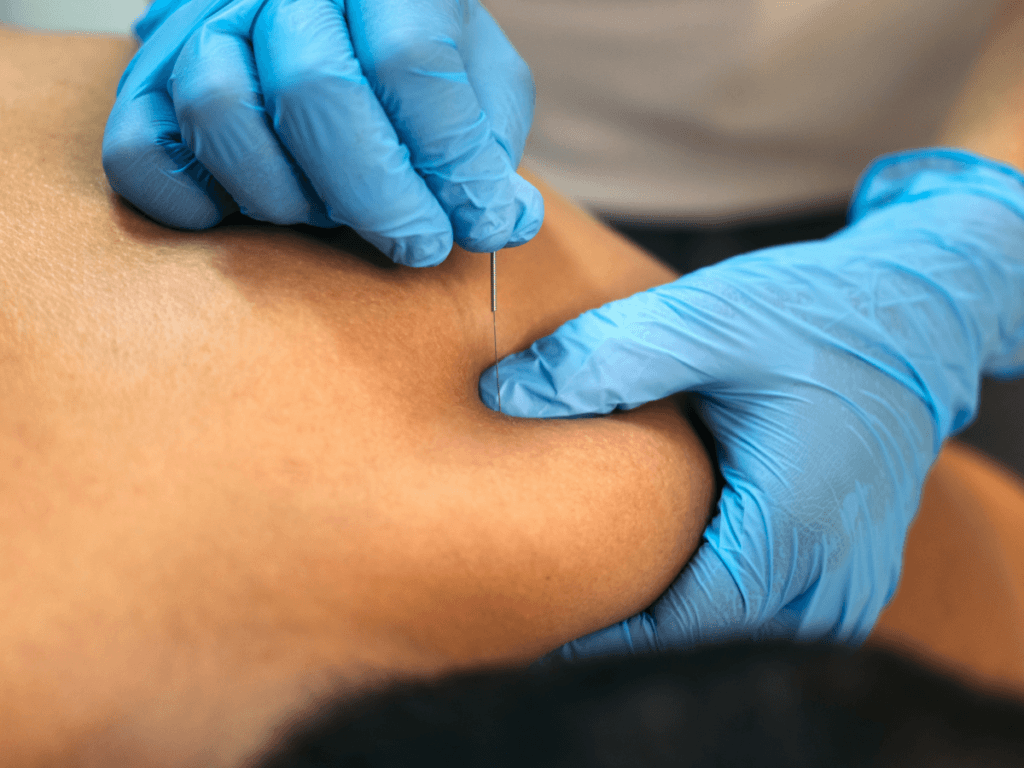
Dry needling uses a thin needle inserted through the skin into or near muscle or related soft tissue. It is called “dry” because no medication is injected.
In physical therapy, dry needling is commonly used for musculoskeletal pain, muscle tightness, trigger-point sensitivity, movement restrictions, and muscle guarding. Some patients feel a quick pinch. Some feel a deep ache, pressure, or twitch. Some feel sore afterward. Some notice easier movement or less tightness soon after treatment. Others do not respond strongly.
The point is not that dry needling is magic. It is that, for the right patient and the right problem, it may help reduce sensitivity enough to make better movement possible.
Is Dry Needling the Same as Acupuncture?
Dry needling and acupuncture both use thin needles, so patients naturally compare them.
The difference is usually in the clinical framework. In physical therapy, dry needling is typically explained through anatomy, muscle function, trigger points, pain modulation, mobility, and movement. Acupuncture is rooted in traditional Chinese medicine and is performed by licensed acupuncture professionals. The professional and legal details vary by state.
Why Would a Physical Therapist Use Dry Needling?
A physical therapist may consider dry needling when muscle tightness, guarding, or trigger-point sensitivity appears to be limiting your movement or keeping pain irritated.
For example:
- A runner may feel a calf or hip muscle tighten every time mileage increases.
- A desk worker may have neck and shoulder tightness that limits rotation.
- A lifter may feel a deep glute or low back tightness that does not respond to stretching.
- A golfer may feel a tight area during rotation.
- A pickleball player may have a muscle that keeps guarding after quick stops and pivots.
- Someone with recurring back, hip, or shoulder pain may feel temporary relief from stretching, but the same spot keeps returning.
In those cases, dry needling may be used to help reduce pain, decrease guarding, improve range of motion, or make the next part of treatment easier to perform.
That last part is important. The goal is usually not just “make the knot go away.” The goal is to help you move better afterward.
What Dry Needling May Help With
Dry needling may help some patients with short-term improvements in pain, muscle tightness, trigger-point sensitivity, and mobility.
Dry needling is typically part of a larger treatment plan and may help relieve pain, improve range of motion, reduce muscle tension, and support a return to active rehab.
Dry needling may help the person who says:
- “I cannot stretch deep enough to reach this spot.”
- “Massage helps, but the tightness keeps coming back.”
- “My muscle feels guarded and will not let go.”
- “This spot limits my range of motion.”
- “I can do the exercises, but this one tight area keeps stopping me.”
What Should Happen at a Dry Needling PT Appointment?
If you schedule physical therapy because you want dry needling, the visit should still include clinical reasoning.
The appointment may include:
- A review of your symptoms and medical history
- Screening for safety concerns and reasons dry needling may not be appropriate
- Movement testing related to your complaint
- Strength, mobility, balance, gait, lifting, or sport-specific testing when relevant
- Explanation of what the therapist thinks is contributing to the problem
- Discussion of risks, benefits, and alternatives
- Informed consent before needling
- A plan for what to do after the treatment
Dry needling itself may take only part of the visit. The rest of the visit is what helps determine whether the modality belongs in your plan at all.
If your only request is, “Needle this spot,” the PT’s responsibility is still to ask, “Does that make clinical sense?”
Who Should Be Cautious With Dry Needling?
Dry needling pierces the skin, so it is not risk-free.
Most side effects are minor and temporary, such as soreness, bruising, bleeding, or temporary irritation of symptoms. Serious complications are uncommon, but they can happen, especially when needling is performed near higher-risk areas of the body.
Tell your physical therapist if you have:
- Bleeding disorders or take blood thinners
- Immune compromise
- Active infection, fever, or skin irritation near the treatment area
- Lymphedema or major swelling concerns
- Pregnancy
- A history of fainting with needles
- Significant needle anxiety
- Recent surgery or medical procedures
- Cancer history or other major medical conditions
- New numbness, weakness, chest pain, shortness of breath, fever, or unexplained symptoms
This does not mean everyone in those categories can never receive dry needling. It means the PT needs the information before deciding what is appropriate.
You should also expect sterile, single-use needles, gloves, sharps disposal, and a clear explanation of what to watch for afterward.
Seek urgent medical care after needling if you develop chest pain, shortness of breath, severe unusual symptoms, signs of infection, new neurological symptoms, or symptoms that feel alarming or out of proportion.
Do You Need a Referral for Dry Needling PT?
Often, no.
In Illinois, patients can go directly to a physical therapist without a physician referral. This is called direct access.
That said, there’s a caveats.
Your insurance plan may still require a referral, authorization, or specific documentation for coverage.
Will Insurance Cover Dry Needling?
Coverage varies.
Some clinics bill dry needling separately. Some offer it as a cash-pay service. Some insurance plans exclude it. Some plans may cover the physical therapy visit but not the dry needling procedure itself.
Before your visit, ask:
- Is dry needling included in the visit or billed separately?
- Is it cash-pay?
- Will my insurance cover the evaluation but not the dry needling?
- If I have Medicare, what paperwork or payment process applies?
- How many visits are usually reasonable before we reassess whether it is helping?
The Bottom Line
Yes, you can go to physical therapy because you want dry needling.
Just do not settle for an appointment where the whole thought process is, “Point to the tight spot.”
Dry needling may help reduce muscle tightness, calm sensitive trigger points, improve flexibility or range of motion, and make it easier to move. But it works best when it is used as part of a physical therapy plan: evaluation, safety screening, informed consent, treatment, reassessment, and follow-through.
The needle may help calm the area.
The evaluation helps determine why that area keeps needing help.
Request a Dry Needling Evaluation in Evanston
If you are interested in dry needling for muscle tightness, pain, trigger points, or limited mobility, Skillz Physical Therapy can help you decide whether it is appropriate for your situation.
Your visit will not be built around a guess. A Skillz physical therapist will evaluate your symptoms, screen for safety concerns, explain whether dry needling fits, and build a plan around what your body needs next.
Request an Appointment at Skillz Physical Therapy or call (847)-859-6240
FAQs About Going to PT for Dry Needling
Can I ask for dry needling at my first physical therapy visit?
Yes. You can tell the PT that dry needling is the main reason you scheduled. The PT should still evaluate you first to decide whether it is appropriate and safe.
Does dry needling hurt?
It depends on the person and the area being treated. Some people feel very little. Others feel a quick pinch, deep ache, twitch, or soreness afterward. Your PT should explain what to expect before treatment begins.
Is dry needling safe?
Dry needling is generally considered low risk when performed by a properly trained clinician using appropriate technique, but it is not risk-free. Minor soreness, bruising, or bleeding can happen. Serious complications are uncommon but possible.
Is dry needling covered by insurance?
It depends on your plan and clinic. Medicare does not cover dry needling by physical therapists. Private insurance varies, so ask before your visit.
Is dry needling a full physical therapy treatment?
It can be part of physical therapy, but it is usually not the entire plan. Most patients also need some combination of exercise, mobility work, strength, movement retraining, education, activity modification, or return-to-activity progression.
How fast does dry needling work?
Some patients feel improvement quickly. Others need more time, and some do not respond strongly. Research is most supportive of short-term pain improvement in selected musculoskeletal conditions, not guaranteed long-term relief from dry needling alone.
Do I need a doctor’s referral?
Often no. Direct access to physical therapy exists in Illinois, but your insurance plan may still require a referral or authorization.