
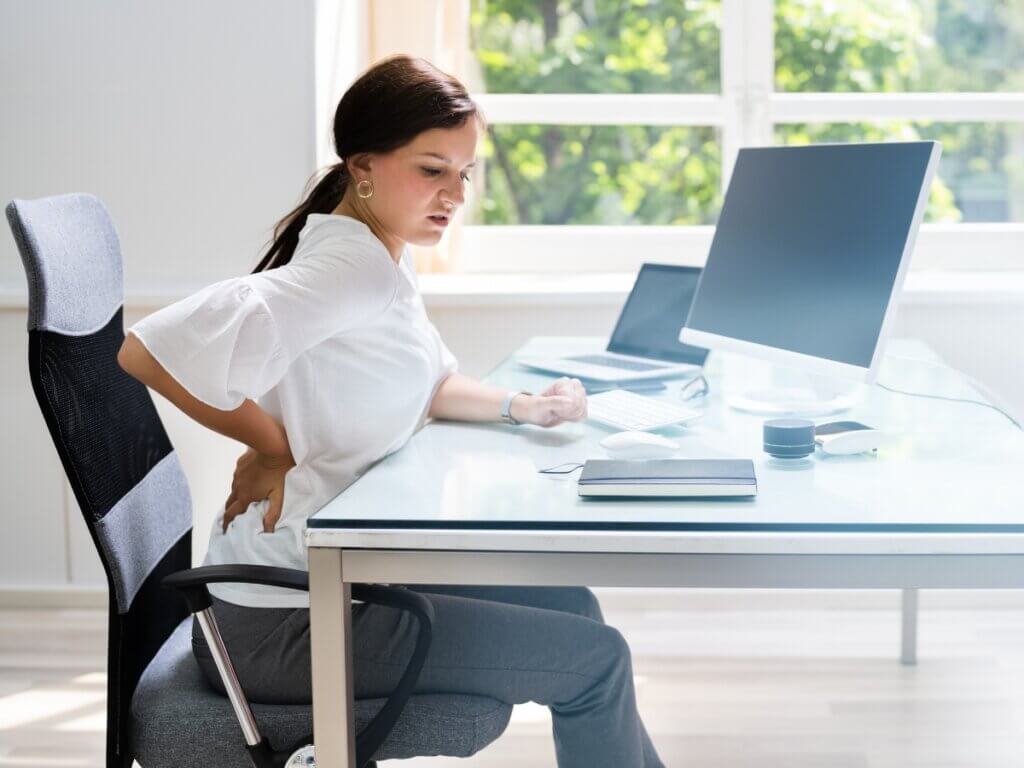
In many cases, yes, you can keep working with back pain, but the goal is not to “push through” pain all day. The goal is to adjust how you work so your spine, hips, neck, and postural muscles are under less stress.
At Skillz Physical Therapy, we often remind patients that back pain is influenced by three big things: posture, workstation setup, and movement habits. If your job requires long sitting, standing, lifting, driving, or computer work, small changes during the day can make a major difference.
Start With Better Alignment
Your posture does not have to be perfect every second, but your body usually feels better when it is not stuck in a strained position for hours.
A good starting point is to keep your ear, shoulder, and hip generally lined up. Avoid letting the head drift forward, the shoulders round, or the upper back collapse. Your shoulders should feel relaxed, slightly down and back, not shrugged or curled forward.
For the spine, think “supported neutral.” The upper back should not stay overly rounded, and the lower back should keep a gentle natural curve. When sitting, your hips should be slightly higher than your knees if possible. This can reduce irritation on the structures of the lower back compared with sitting with the knees higher than the hips.
Keep Work in Your Best Zone
A helpful rule is to keep most work between hip and shoulder height. This is your most efficient zone. When tasks are too low, you may bend and round your back. When they are too high, you may arch, shrug, or strain your neck and shoulders.
For desk work, your keyboard and mouse should allow your elbows to stay around 90 degrees, with your arms relaxed. Your monitor should be around eye level so you are not constantly looking down or craning your neck upward. If you work from a laptop, consider raising the screen and using a separate keyboard and mouse.
Your Chair Should Fit You
A chair that works for one person may not work for another. Seat depth matters, especially for people with shorter legs. If the chair is too deep, it can push the pelvis backward, flatten the lower back, and increase stress through the spine.
Your feet should rest flat on the floor or on a footrest. The back of the chair should support your upper back, and a lumbar roll or built-in lumbar support can help maintain the natural curve of your lower back.
Move Before Pain Builds
One of the most important strategies is taking breaks before your body starts yelling at you. A short break every 30 minutes is ideal for many people. If you have been sitting, stand up. If you have been standing, sit or shift positions.
These breaks do not have to be long. Even one to two minutes can help. You can use that time to stretch, walk, reset your posture, or do exercises prescribed by your physical therapist.
If you already know that pain usually starts after 45 minutes of sitting or two hours of standing, do not wait until that point. Be proactive. Move, stretch, or do your specific exercises before the pain sets in. This can help prevent pain from accumulating by the end of the day or week.
Exercises Should Match Your Job and Your Body
The right exercises depend on your evaluation, symptoms, and type of work. For people who sit at a computer, common needs include neck retraction, upper back extension, and lumbar mobility or support exercises. But the best plan is individualized.
A physical therapist can help identify whether your pain is coming from posture, weakness, mobility limitations, nerve irritation, repetitive movements, or poor workstation setup.
When Should You Stop or Get Checked?
You should seek medical care right away if back pain comes with new bowel or bladder problems, significant weakness, numbness or tingling into the legs, fever, unexplained weight loss, recent trauma, or severe pain that is rapidly worsening.
Otherwise, many people do not need complete rest from work. In fact, staying active and returning to normal activities as tolerated is often helpful. The key is modifying your workday so your body has support, variety, and recovery built in.
Back pain does not always mean you have to stop working. But it does mean your body is asking for better mechanics, better breaks, and a smarter plan.
Tags: back pain, Pain relief