
Why the Knee May Not Be the Only Problem
Pickleball can expose knee pain quickly.
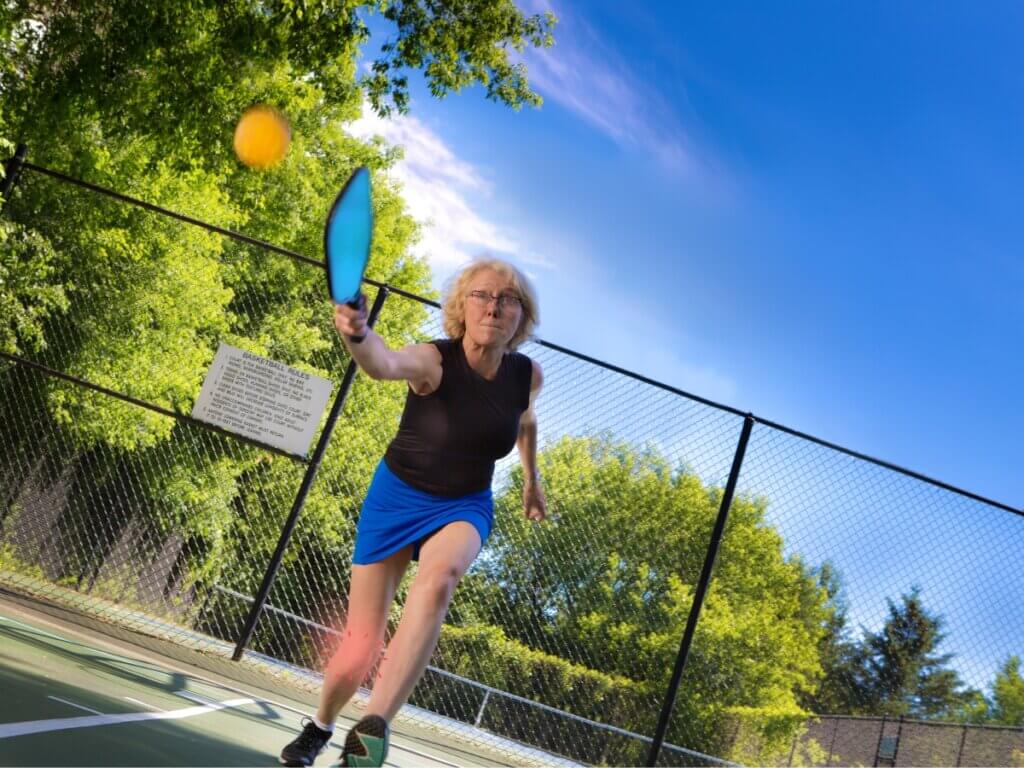
A short sprint to the kitchen line. A sudden stop. A side step. A pivot. A low reach. A quick change of direction. The movement does not look extreme, but the knee has to absorb, control, and redirect force over and over again.
When knee pain shows up during pickleball, the usual explanation is simple:
“The knee is the problem.”
That may be true.
But it is not always the full answer.
The knee may be where the pain is felt. It may not be the only place where the problem begins.
That distinction matters because treating the knee alone can miss the reason the knee keeps getting irritated during play.
Pickleball Puts Specific Demands on the Body
Pickleball is not just casual movement.
It requires repeated starts and stops, lateral movement, twisting, reaching, lunging, and quick recovery after each shot. Those movements require more than a healthy knee joint. They require multiple body parts to work together.
If one area does not move well, produce enough strength, or control motion properly, the knee may take more stress than it should.
A stiff ankle can change how the knee bends.
A weak hip can allow the knee to collapse inward during a lunge or side step.
Poor single-leg control can overload the knee during quick stops.
Limited balance can make the knee work harder to stabilize the body.
A painful or guarded movement pattern can shift stress into the knee repeatedly.
In those cases, the knee pain is real.
But the knee may be the site of irritation, not the full source of the problem.
The Common Mistake: Treating the Painful Area First
Many knee-pain plans begin where the pain is felt.
Ice the knee. Rest the knee. Stretch the knee. Strengthen the knee. Use a brace. Take a break from pickleball. Try a few general leg exercises.
Some of those steps may help temporarily.
But they do not automatically answer the most important question:
Why is the knee being overloaded during pickleball?
If that question is not answered, the same pattern can return.
The knee feels better after rest. The player returns to the court. The same side steps, lunges, pivots, and quick stops return. The same stress pattern returns. The knee pain comes back.
That is not proof that the player is simply “getting older” or “needs to stop playing.”
It may mean the source of the stress has not been clearly identified.
Knee Strength Is Not the Same as Knee Control
Strength matters.
But knee pain during pickleball is not always solved by strengthening the knee alone.
A player may have decent strength in a controlled exercise but poor control during a quick lateral move. Another may test well in one muscle group but shift weight poorly during a lunge. Another may have enough knee strength but limited hip or ankle mobility that changes the way force travels through the leg.
Pickleball pain often appears under speed, repetition, and direction change. That means the evaluation has to look at how the body behaves during movement, not just whether the knee hurts.
A useful evaluation should answer a more specific questions:
Is the painful area actually the source, or is it reacting to a problem elsewhere?
If this question is not answered, treatment may be aimed at the symptom instead of the cause of the repeated irritation.
More exercises do not fix an unclear diagnosis.
They only add effort.
Why Rest Alone Often Fails
Rest can calm knee pain down.
But rest does not explain the pain.
A player may take a week or two off, feel better, and return to the court. At first, the knee seems fine. Then the same movement demands return. The same loading problem returns. The same pain returns.
That is the limitation of rest. It removes the demand for a while, but it does not identify why the knee was irritated under that demand.
The same is true for any treatment that only reduces symptoms. If the reason the knee is being stressed during pickleball is still present, the pain may keep coming back when play resumes.
Temporary relief is not the same as resolution.
The better question is not, “How do I quiet the knee down?”
The better question is, “What is making the knee take the stress during pickleball?”
That question has to be evaluated through the right Knee Pain physical therapy treatment approach.
The Body Does Not Move in Isolated Parts
The knee sits between the hip and the ankle.
That makes it highly dependent on what happens above and below it.
If the hip does not control the thigh well, the knee may drift into a position that increases stress. If the ankle does not move enough, the knee may compensate. If balance is poor, the knee may work harder to keep the body stable. If the player avoids loading one side, the other side may absorb more work.
This is why two pickleball players can both report knee pain and need different treatment.
One may need hip strengthening.
One may need ankle mobility.
One may need balance training.
One may need correction of a loading pattern.
One may need treatment directed at the knee itself.
One may need a combination based on what the evaluation shows.
The point is not to guess which one is true.
The point is to find out.
What Skillz Looks For Before Treatment Begins
At Skillz Physical Therapy in Evanston, the goal is not to treat the knee simply because the pain is in the knee.
The goal is to PinPoint what is actually driving the pain before treatment begins.
That is the difference between a specific plan and a generic one.
If testing shows the knee itself is the source, treatment should match that. If testing shows the hip is contributing to the knee stress, treatment should match that. If testing shows the ankle, balance, strength, or movement pattern is part of the problem, treatment should match that.
The finding determines the treatment.
If the finding is wrong, the treatment plan is wrong.
That is why Skillz is built around No-Guesswork Physical Therapy. Treatment without clarity is guesswork. The goal is not to guess better. The goal is to evaluate better.
For patients searching for physical therapy evanston il, this approach focuses on identifying the actual source of pain before creating a treatment plan.
How the AIM Method Applies to Pickleball Knee Pain
Skillz uses the AIM Method to reduce guesswork before treatment begins.
The first step is Assessment.
This includes a detailed history, testing, and whole-body observation. For a pickleball player, the assessment must look beyond the statement “my knee hurts.” It should consider when the pain appears, what movements provoke it, what activities make it better or worse, and whether another area is contributing to the knee stress.
The second step is Integrated Diagnostics.
This is where the findings are interpreted together. A weak hip, stiff ankle, painful knee motion, or balance deficit does not mean much by itself. It matters when it explains the actual problem the player is having on the court.
The third step is Modalities.
Treatment methods are selected based on what was found. Modality tools are chosen because they match the evaluation and help speed up recovery.
Assessment first.
Diagnosis second.
Treatment third.
Not exercises first.
Not assumptions first.
Not “try this and see what happens.”
What Patient Proof Shows
The strongest proof for this approach is not a slogan.
It is what patients report when the evaluation and treatment match the actual problem.
Mary F., MD, wrote:
“As a medical professional, I wouldn’t usually pick a healthcare provider off the Internet. But I needed a physical therapist close to my home and after seeing the reviews for Skillz I decided to give them a try. I have had a great experience! Aimee and Richelle are professional, competent and kind. My strength, balance, and knee pain have greatly improved. I highly recommend them.”
That review matters because it names three results that are directly relevant to pickleball knee pain: strength, balance, and knee pain.
Pickleball requires all three.
A knee that hurts during play may need more than knee-focused treatment. It may require better strength, better balance, better control, and a clearer understanding of what is driving the pain.
That is why the evaluation matters.
The faster the source is identified, the faster treatment can be directed toward the right problem instead of spending weeks on exercises that do not match the cause.
When Knee Pain Continues, the Pattern Matters
Persistent knee pain during pickleball should not be ignored.
It should also not be automatically blamed on age, arthritis, weak knees, or too much activity.
A repeated pain pattern is information.
When does it appear?
Is it during side stepping?
Is it during lunging?
Is it during stopping?
Is it after play, rather than during play?
Does one side feel weaker or less stable?
Does rest help temporarily but fail to hold?
Has previous treatment focused only on the knee?
Those answers can point toward what has not been identified yet.
If the same pain keeps returning after rest, exercises, bracing, or previous treatment, the problem may not be a lack of effort. It may be that the source of the pain has not been clearly identified.
The Better Question Before Playing Through It
If knee pain keeps showing up during pickleball, the first question should not be:
“How do I protect my knee?”
The better question is:
“What is making the knee take the stress?”
That question changes the direction of care.
Because if the source has not been identified, the plan may keep chasing symptoms. More rest may be advised. More exercises may be added. More stretches may be tried. But the reason the knee keeps getting irritated during play may still be missed.
Knee pain during pickleball is not always only a knee problem.
Sometimes the pain continues because the source has not been clearly identified.
At Skillz Physical Therapy in Evanston, the first job is to PinPoint what is actually driving the pain, then treat based on what was found.
Ready to Stop Chasing Knee Pain?
If knee pain keeps returning during pickleball, it may be time to find out what is actually causing the stress—not just treat the symptoms.
At Skillz Physical Therapy in Evanston, every Knee Pain physical therapy treatment plan starts with identifying the real source of the problem so treatment matches your needs.
If you are looking for trusted physical therapy evanston il, schedule your evaluation today and get back to playing with more confidence and less pain.
Tags: physical therapy Evanston IL, Knee Pain physical therapy treatment